 Most popular
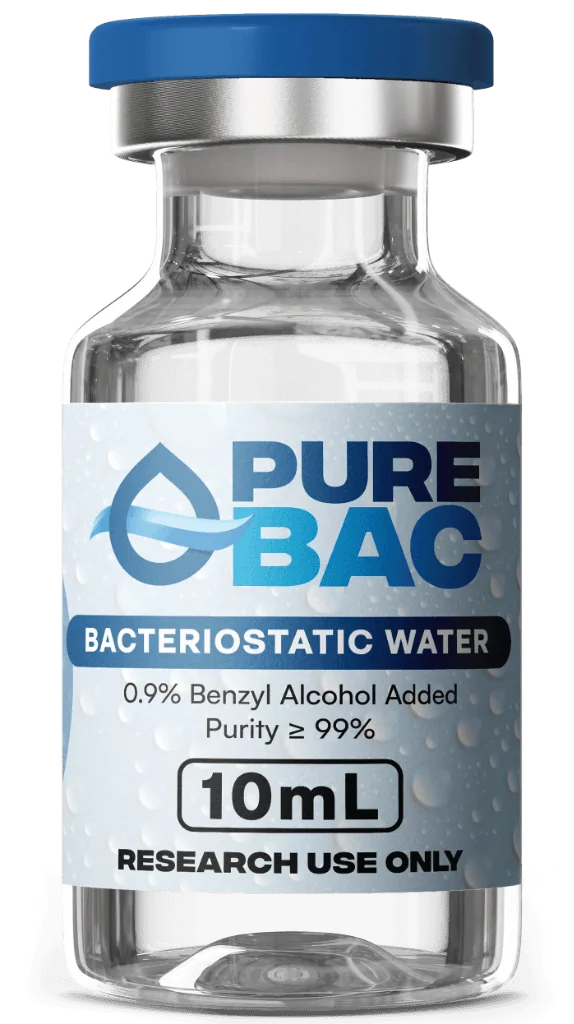
10 mL vial
4.98 · 924 reviewsMulti-dose workhorse. Repeated sterile access for the full 28-day window.
0.9% BAType I glass
$14.99$17.99
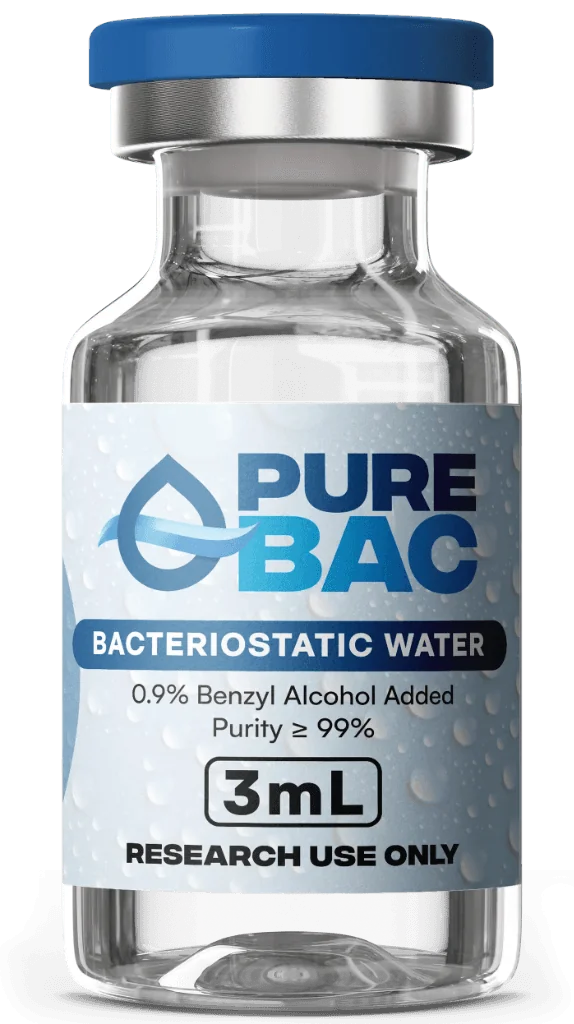
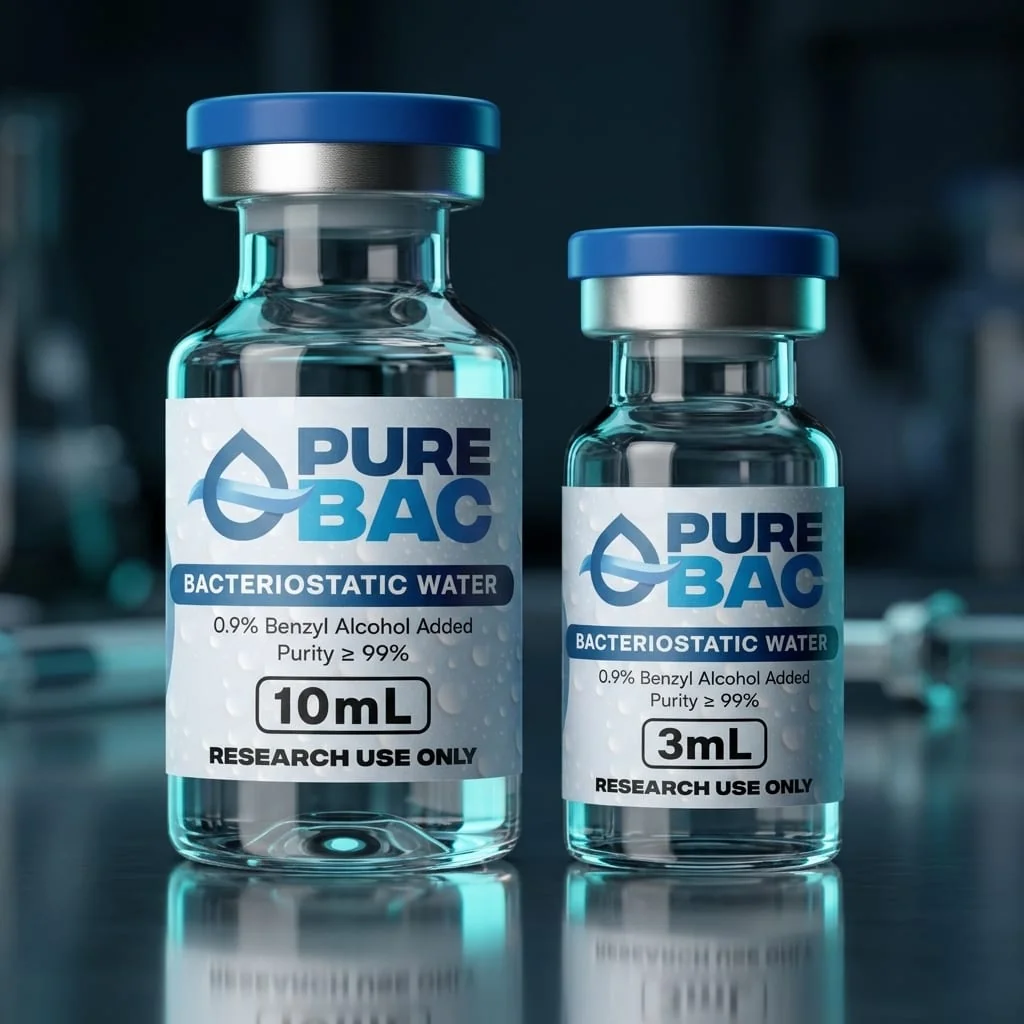
Specifications & COAUSP-grade bacteriostatic water with 0.9% benzyl alcohol in 10 mL and 3 mL multi-dose vials. Seven lab tests behind every batch, and a QR code on the label to prove it.
A diluent is only as good as its paperwork. Every production lot clears seven analytical checks, and the certificate is a QR code on the label — not a claim in a footer.
Same water, same 0.9% preservative, same seven tests. Pick the volume that matches how much you actually reconstitute.
Enter the peptide amount, how much bacteriostatic water you are adding, and the dose you want. The calculator returns the mark to draw to on a U-100 insulin syringe.
Start from a common protocolCVS and Walgreens rarely stock bacteriostatic water, and when they do it is behind the counter with a prescription attached.
Nine milligrams of benzyl alcohol per millilitre is the USP sweet spot: enough to stop bacteria replicating, not enough to denature a peptide chain. Below it you lose multi-dose protection; above it you risk precipitating the compound.
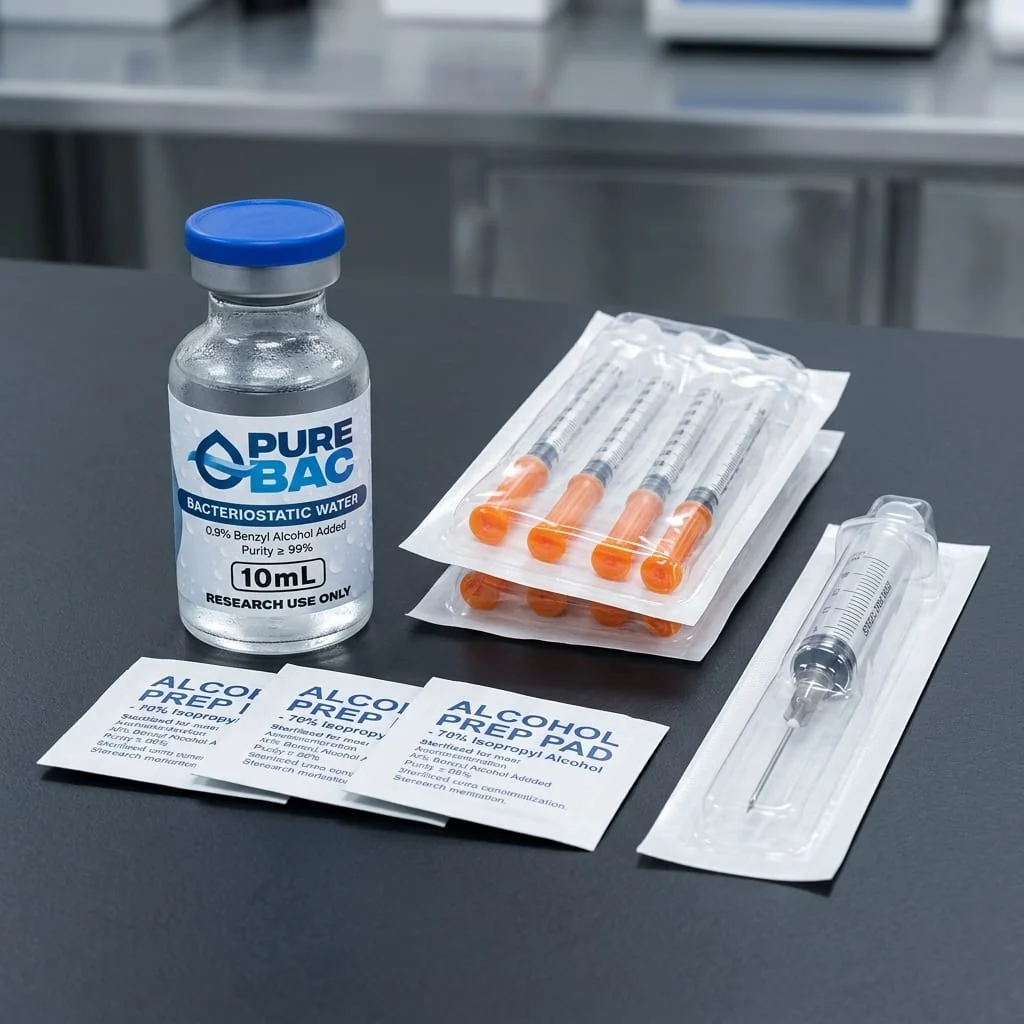
USP allows multi-dose entry for 28 days after the first needle goes in. Wipe the septum with 70% isopropyl every time, write the date on the label, and discard whatever is left when the window closes.
Sterile Water for Injection has no preservative at all. Once punctured it is single-use — every entry after that introduces contaminants into an unprotected solution. Use it for a multi-week protocol and you are gambling.
| Bacteriostatic water | Sterile water for injection | |
|---|---|---|
| Antimicrobial agent | 0.9% benzyl alcohol | None |
| Usable after puncture | Up to 28 days | Single use, discard |
| Right for multi-dose vials | Yes | No |
In-depth research on 0.9% benzyl alcohol chemistry, USP <797> multi-dose standards, laboratory reconstitution calculations, and verified sourcing.
Understand the precise chemical composition of bacteriostatic water, how benzyl alcohol halts bacterial proliferation, and why USP <51> testing establishes it as the gold standard reconstitution diluent.
Master the aseptic laboratory procedure for peptide reconstitution, avoid mechanical shearing, calculate accurate syringe dosages, and maintain biological stability.
Explore the pharmacological and microbiological reasons behind the 28-day expiration threshold for opened multi-dose vials and how to manage research solvent inventory.
Examine retail pharmacy prescription restrictions, unpack why Amazon reconstitution fluids present serious contamination risks, and discover how to verify legitimate laboratory diluents.
A certificate of analysis is a testable claim, not a trust badge. This guide walks each line of a bacteriostatic water COA, gives the published specification to check it against, and lists what a decorative COA leaves out.
Hospira is the name most people search for, and most comparisons against it are written from memory. This one is read off the FDA-approved label: two presentations, two preservative strengths, two container materials, and what each one actually commits to.
Choosing between a 10 mL and a 3 mL vial is an arithmetic problem with a deadline attached. This guide gives the break-even math, three worked protocols, and the case for splitting volume across smaller vials.
Every review below is from a verified order.
We use it for university lab peptide synthesis assays. The 0.9% benzyl alcohol content matches the labelled specification on our HPLC runs, and no cloudy precipitation over full 28-day cycles.
After getting sent unpreserved saline by a random Amazon seller, I switched. Flip-off cap completely sealed, stopper held vacuum, reconstitution was smooth. The calculator made the syringe maths effortless.
Ordered the 3-pack here instead, arrived in Florida in two days with free priority shipping. Smooth dilution, no injection-site pain, no burn. Outstanding supplier.
Still stuck? Email us and a human replies the same working day.
[email protected]Generally, no. Retail chain pharmacies such as CVS, Walgreens, and Walmart rarely keep Bacteriostatic Water (BAC water) in stock on front shelves. When stocked behind the pharmacy counter, pharmacists typically require an active doctor's prescription for a specific injectable medication that mandates dilution. Furthermore, retail pharmacy prices can exceed $35–$45 per vial. Dedicated online suppliers like Bacteriostatic Water US supply authentic, freshly manufactured USP bacteriostatic water directly to your door with same-day US shipping and no prescription required for research reconstitution.
Yes. Bacteriostatic Water is not a DEA scheduled substance or controlled drug. It consists solely of non-pyrogenic sterile water with 0.9% benzyl alcohol preservative. It can be legally purchased and possessed across the United States for laboratory research, reconstitution of in-vitro peptides, and diagnostic equipment calibration. Retail brick-and-mortar pharmacies choose internal store policies requiring prescriptions, but specialized US distributors ship legally compliant multi-use vials nationwide.
The crucial difference is the preservative. Sterile Water for Injection (SWFI) contains 100% pure sterile water with ZERO preservatives. Once punctured, it is strictly single-use; any air exposure can introduce airborne bacteria that multiply rapidly in the unpreserved liquid, requiring disposal within 4 to 24 hours. In contrast, Bacteriostatic Water contains 0.9% (9 mg/mL) benzyl alcohol. Benzyl alcohol is a bacteriostat that inhibits bacterial proliferation, enabling the vial to be safely penetrated by sterile needles multiple times for up to 28 days.
The 0.9% (9 mg/mL) concentration is the exact USP pharmacological sweet spot. At 0.9%, benzyl alcohol effectively disrupts bacterial cellular membranes and stops bacterial replication (bacteriostasis) without denaturing or degrading sensitive peptide chains, proteins, or active molecules. Concentrations lower than 0.9% fail to provide robust multi-dose anti-microbial protection, while higher concentrations could precipitate delicate amino acid chains.
According to United States Pharmacopeia (USP) guidelines, Bacteriostatic Water remains safe for multi-dose entry for up to 28 days following the initial needle puncture. Each time you insert a needle, you must clean the rubber septum with a 70% isopropyl alcohol wipe. We recommend writing the puncture date on the vial's label. Any remaining bacteriostatic water after 28 days should be discarded to ensure total sterility.
No. Unopened Bacteriostatic Water should be stored at controlled room temperature between 20°C to 25°C (68°F to 77°F), away from direct sunlight and extreme heat. Do NOT freeze bacteriostatic water, as freezing can stress the glass vial, compromise the crimp seal integrity, or alter solution osmolarity. Once you have reconstituted a peptide with BAC water, the resulting peptide solution should usually be refrigerated at 2°C to 8°C (36°F to 46°F).
If you reconstitute a multi-dose peptide vial (such as BPC-157, Semaglutide, or Tirzepatide) using plain sterile water, you must administer the entire vial within 24 hours. Because sterile water contains no preservative, every needle entry introduces microscopic contaminants that thrive at refrigerated temperatures. Using sterile water for multi-week regimens exposes you to bacterial contamination, cloudiness, loss of peptide potency, and localized injection site infections. Always use Bacteriostatic Water with 0.9% benzyl alcohol for multi-dose vials.
Amazon’s strict health marketplace policies technically prohibit pharmaceutical prescription injectables, leading to third-party sellers listing mislabeled products, non-sterile reconstitution fluids, counterfeit Hospira labels, or simple sterile saline marked as bac water. Furthermore, third-party seller inventory stored in hot Amazon fulfillment centers often exceeds recommended USP temperature limits, degrading preservative potency. Buying directly from a dedicated US medical reconstitution supplier guarantees verified batch COAs and temperature-regulated domestic shipping.
1. Clean hands and wipe both the peptide and bacteriostatic water vial septums with 70% alcohol pads. 2. Draw the desired volume of BAC water (e.g. 2.0 mL) using a sterile transfer syringe. 3. Insert the needle into the lyophilized peptide vial at a 45-degree angle against the inner glass wall. 4. Slowly inject the water down the wall—never spray directly onto the delicate lyophilized powder cake. 5. Gently roll or swirl the vial between your palms until completely dissolved. Never shake vigorously, as shaking can shear fragile peptide amino acid bonds. 6. Label with the date and refrigerate at 2°C–8°C.
Both contain the identical active formulation: USP Sterile Water for Injection with 0.9% Benzyl Alcohol. Pfizer Hospira is the historic brand-name pharmaceutical manufacturer (often packaged in fliptop plastic vials). Our PureBac™ brand is produced in an ISO 7 cGMP certified facility packaged in Type I borosilicate glass vials with tamper-evident caps, offering identical chemical purity and independent HPLC Certificates of Analysis at a significantly lower cost per milliliter.